
Justice • Peace • Community Service
The Council of Justices of the Peace of Sri Lanka (CJPSL) is registered as a National Council under Act No. 7 of 2007 in the Democratic Socialist Republic of Sri Lanka. Founded in 2012, we are the official national body representing appointed Justices of the Peace across all provinces of Sri Lanka.
CJPSL intends to bring people and organisations together from all levels of society — providing them a platform, the tools, resources, and opportunities to ensure everyone can help make a positive difference for human rights. We believe in innovation, and through our projects and initiatives, we create new ways to effectively address challenges, incite positive change, ensure long-term sustainability, and create a real impact on human rights.
Recognising that an absence of war does not automatically lead to peace and reconciliation, the Council was formed to dedicate itself to defending and promoting respect for human rights and social justice in Sri Lanka. We serve as a bridge between the legal framework of Sri Lanka and its citizens, ensuring every individual — regardless of background — has access to justice and legal awareness.
To bring people and organisations together from all levels of society, by providing them a platform, the tools, resources, and opportunities to ensure everyone can help make a positive difference for human rights. We focus on pragmatic and solutions-based approaches to promoting and protecting the respect for human rights, for everyone, everywhere.
We envision a world in which everyone, everywhere has the right to a dignified life — a world in which human rights are respected and all persons are free to develop themselves without distinction of origin, religion, political opinion, race, gender, or sexual orientation. We create new ways to effectively address challenges, incite positive change, and ensure long-term sustainability.
Justice, Peace, Integrity, and Community Service are the four pillars of CJPSL. We are committed to upholding the rule of law, fostering harmony across communities, serving Sri Lankan citizens with transparency and accountability, and preserving the rich cultural heritage and identity of our nation.
Richard I of England commissioned certain knights to preserve peace in unruly areas. Known as "keepers of the peace", they were responsible to the King for ensuring the law was upheld — the origin of the Justice of the Peace institution.
The title Justice of the Peace derives from this year, in the reign of Edward III. JPs were given power to bind over unruly persons "to be of good behaviour" — a preventive rather than punitive measure still used today.
Current JP appointments in Sri Lanka are made under the Judicature Act No. 02 of 1978, by the Minister of Justice. Appointees take oaths before a High Court or District Court Judge, with the Registrar of the Supreme Court recording the appointment.
Act No. 7 of 2007 of the Democratic Socialist Republic of Sri Lanka provided the legislative framework under which the Council of Justices of the Peace of Sri Lanka is registered as a National Council.
The Council of Justices of the Peace of Sri Lanka was officially established under the leadership of Dr. AMM. Fahath JP. The founding vision: to unite all appointed JPs in Sri Lanka under one national body dedicated to justice, peace, and community service.
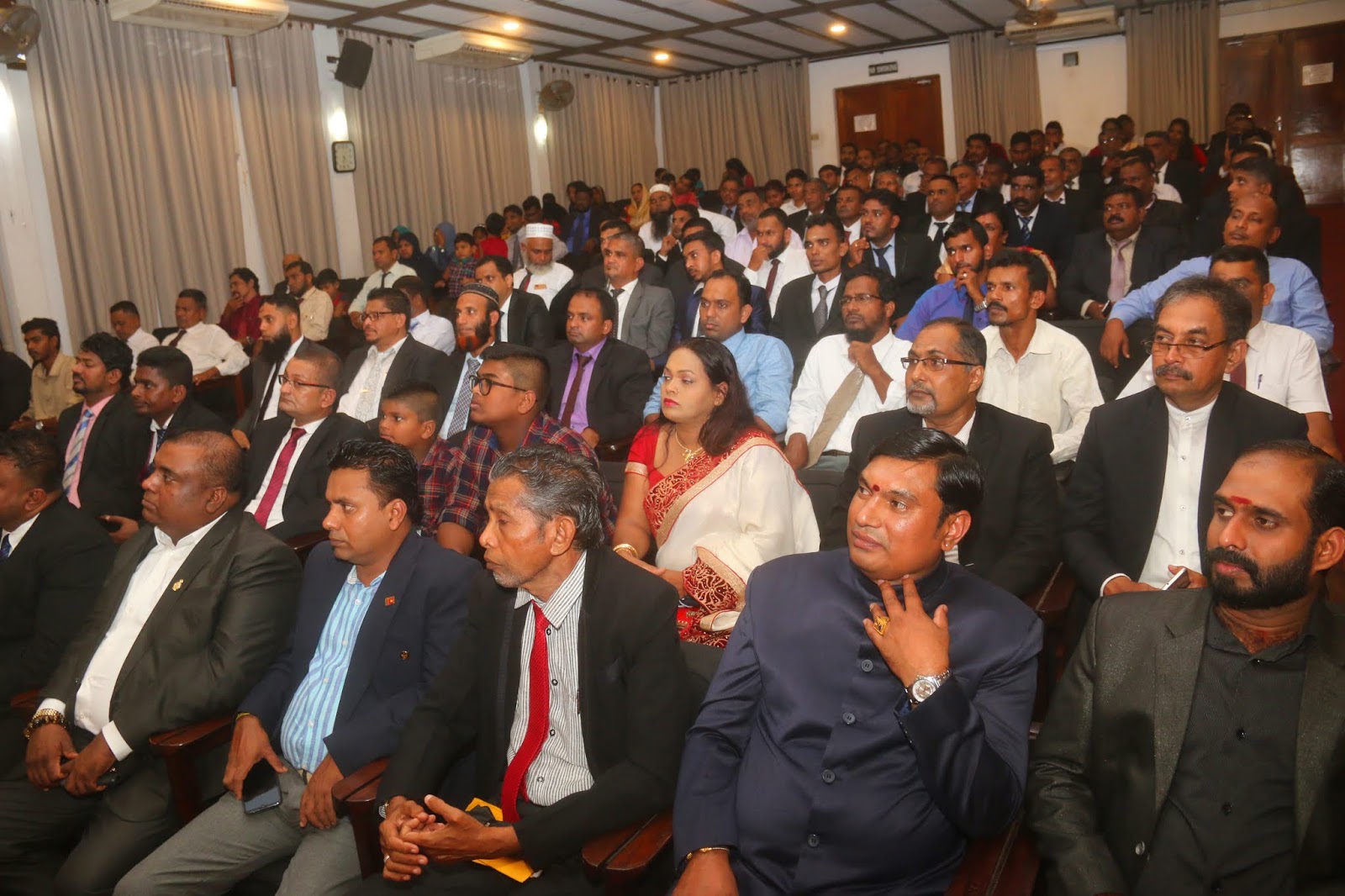
CJPSL hosted landmark conventions including the National JP Convention, Eastern Province Convention, Central Province Convention, Northern Province Convention, and the Nelson Mandela International Peace Summit — bringing thousands of JPs together nationwide.
CJPSL hosted the prestigious Colombo Peace Conference, reinforcing its commitment to reconciliation and peacebuilding. Membership grew to over 14,000 registered JPs across all 25 districts of Sri Lanka.
The new Governing Council for 2026–2030 was formally installed under Chairperson Dr. AMM. Fahath JP, with a renewed mandate to expand digital member services, strengthen provincial networks, and deepen community impact across Sri Lanka.
In Sri Lanka, a Justice of the Peace (JP) is an honorary public officer appointed by the Minister of Justice under the Judicature Act No. 02 of 1978. JPs are authorised to witness legal documents, administer oaths, and certify copies — serving as neutral, trusted community officials at no charge to the public. There are approximately 100,000 JPs across the island.
Senior Attorney-at-Laws appointed to preside in the absence of a sitting Magistrate. They exercise full magisterial powers in their designated district and handle summary criminal matters.
Appointed with legal authority to witness documents, certify copies, and administer oaths in all parts of Sri Lanka — the most wide-ranging JP appointment category.
Appointed with authority limited to a specific judicial district. These JPs serve their local communities, providing accessible justice services within their designated geographic area.
Certain government officers hold JP status by virtue of their office. The President of Sri Lanka and designated officers are ex-officio Justices of the Peace under the Judicature Act.
Senior Officers
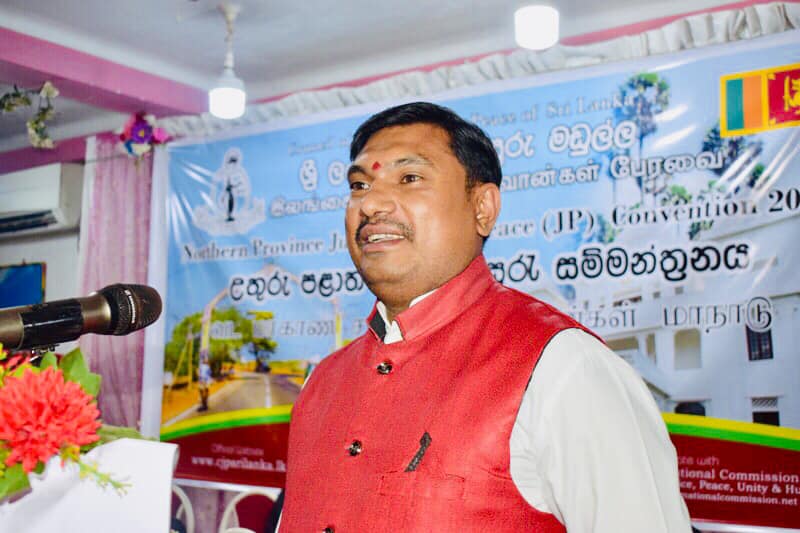
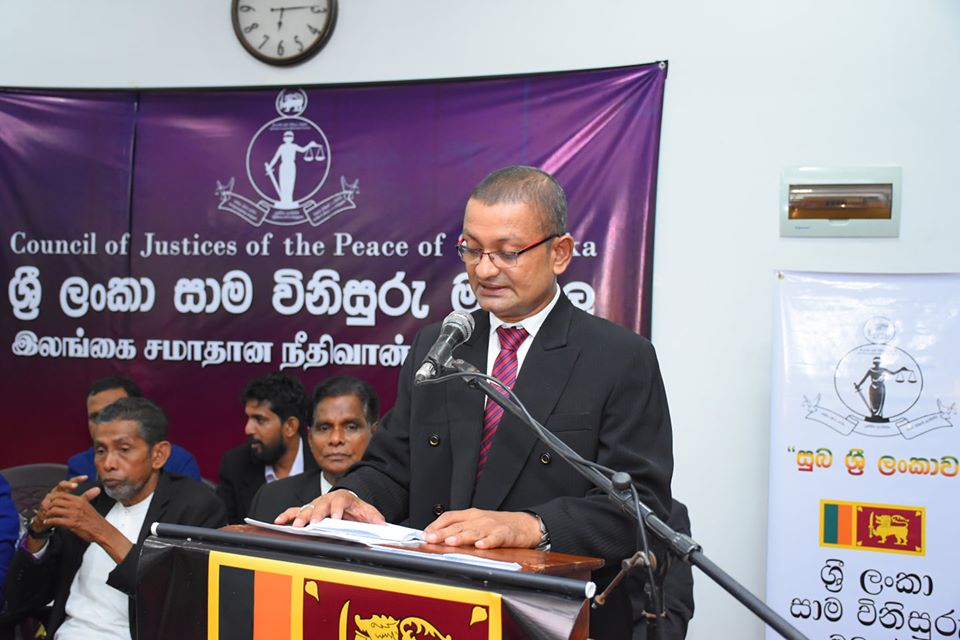
Governing Council Members

Official Governing Council 2026–2030
Certified witnessing of legal documents, affidavits, statutory declarations, and certified copies — provided free to the public.
Public education on citizens' rights, legal literacy, and access to justice across all provinces of Sri Lanka.
Neutral mediation services for community disputes, family matters, and civil conflicts — fostering peaceful resolution.
Workshops, seminars, and certification renewal programs to maintain the highest professional standards among registered JPs.
Community outreach programs, public consultations, and volunteer initiatives focused on human rights and social justice.
Searchable directory to locate a qualified, registered JP in your district instantly — available 24/7 online.
If you are an appointed Justice of the Peace in Sri Lanka, register with CJPSL to receive your official digital membership card, QR verification certificate, and access to member services and training programs.